
At first glance, the price of petrol might seem to have little to do with buying or selling a home.
But the connection is closer than you may think.
When fuel prices rise, the effects can move through the economy in a chain:
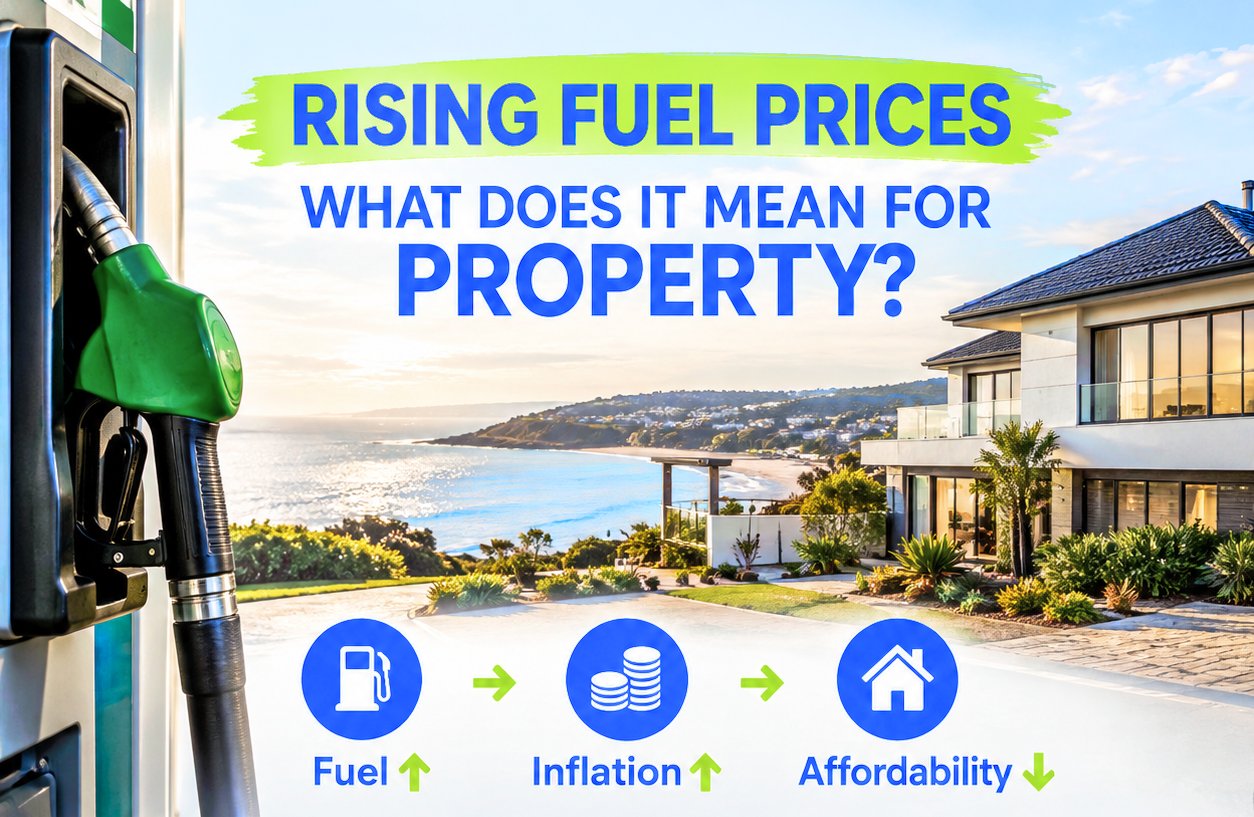
Higher fuel costs → higher transport and operating costs → inflationary pressure → interest-rate pressure → household affordability → property demand
And with fuel prices increasing significantly in South Africa from 7 October 2026, it is worth understanding what this could mean for homeowners, buyers and sellers.
From the fuel pump to the household budget
South Africa is particularly exposed to international oil prices because we rely heavily on imported crude oil and petroleum products.
The latest adjustment saw petrol 93 increase by R3.12 per litre, petrol 95 by R3.33 per litre, while diesel increased by between R2.84 and R3.24 per litre. The Department of Mineral and Petroleum Resources attributed the increases largely to higher international oil prices, supply concerns and increased shipping costs.
The impact doesn't stop at the petrol station.
Fuel is part of the cost of transporting people, food, building materials and other goods. When transport becomes more expensive, businesses and households can feel the pressure through higher day-to-day costs.
For a household already managing a bond, rates, insurance, municipal costs and general living expenses, less disposable income can ultimately mean less room in the property budget.
The interest-rate connection
This is where the property market becomes particularly sensitive.
Higher fuel prices can contribute to broader inflation. If inflation remains elevated, interest rates may stay higher for longer or come under renewed upward pressure.
The South African Reserve Bank has already highlighted the risk of persistent fuel and other price shocks becoming embedded in inflation expectations. Its October 2026 Monetary Policy Review projects inflation to remain above 5% until the second quarter of 2027.
For property buyers, this matters because interest rates directly affect affordability.
A buyer may technically qualify for a particular bond amount, but higher monthly living costs can change what they are actually comfortable spending.
That can lead to:
- Buyers becoming more price-sensitive
- Greater demand for value-for-money properties
- Buyers taking longer to make decisions
- More careful consideration of monthly bond repayments
- Some buyers postponing their purchase altogether
Does this mean property prices will fall?
Not necessarily.
This is an important distinction.
Higher fuel prices do not automatically translate into falling property prices.
Property markets are influenced by many factors, including interest rates, employment, household income, supply and demand, buyer confidence, local economic conditions and the availability of suitable properties.
In some markets, transaction volumes and the length of time properties spend on the market may change before there is any significant movement in average property prices.
That means sellers shouldn't automatically panic — but they should pay attention.
Pricing your property becomes even more important
When buyers are under increasing financial pressure, an overpriced property can become even harder to sell.
Today's buyers have access to extensive information and can compare properties, locations, features and prices before deciding where to spend their money.
A property that is correctly positioned from the beginning has a better opportunity to attract serious buyers.
That means sellers should focus on:
Accurate pricing.
Understand what comparable properties are actually achieving, not simply what other sellers are asking.
Strong presentation.
First impressions matter, particularly when buyers are becoming more selective.
Effective marketing.
Your property needs to reach the right buyers, with professional photography, compelling descriptions and a strong online presence.
Local market knowledge.
National economic trends matter, but property is ultimately local. Conditions in Mossel Bay and the surrounding Garden Route can differ significantly from other parts of South Africa.
There is another side to the story: construction
Rising fuel prices can also affect the property market from the supply side.
Construction equipment, deliveries, logistics and the transportation of building materials all depend on energy and fuel.
If these costs increase, the cost of developing new properties can also rise.
This can potentially influence the price of new homes and developments and, in areas where available stock is limited, make existing properties more attractive.
So the relationship between oil prices and property isn't simply:
Oil goes up → property goes down.
The reality is far more complex.
What should buyers and sellers do?
For buyers, this is a time to look beyond the purchase price.
Consider the full monthly cost of owning the property, including the bond, rates, levies, insurance, maintenance, utilities and transport.
For sellers, the message is equally clear:
Don't guess the market. Understand it.
A changing economic environment makes professional advice and accurate local market information more valuable — not less.
At Property Monopoly, we believe that successful property decisions start with understanding the market and the people who live in it.
Whether you're buying, selling, investing or simply keeping an eye on the market, we're here to help you make informed decisions about property in Mossel Bay and the surrounding Garden Route.
Property is local.
The market is always moving.
Stay informed. Stay ahead.